
2nd Gen Kpop Heardle
2nd Gen Kpop Heardle deals a short clip from the groups that carried the genre across Asia — unlimited rounds from one shared 2005–2012 pool.
Loading 2nd Gen Kpop Heardle round…
Every 2nd Gen Kpop Heardle round deals ten random clips from this era only — replay as often as you like.
About 2nd gen Kpop
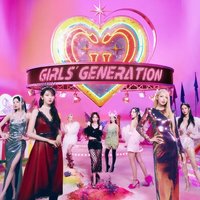
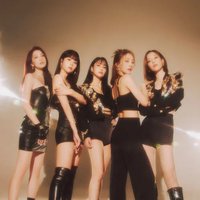
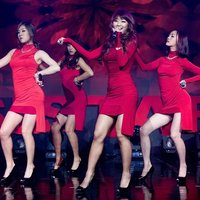
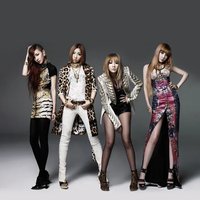
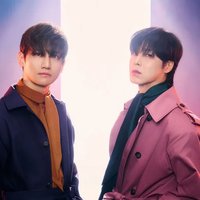
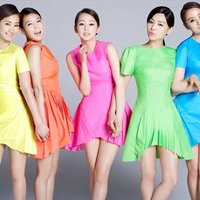
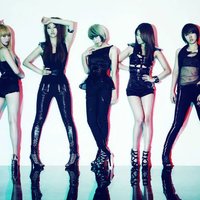
Second-generation Kpop covers roughly 2005–2012, the wave that turned Korean idol pop from a domestic business into a pan-Asian phenomenon. It was built around the "big three" agencies — SM, YG and JYP — whose debut classes in this window set the template everything since has followed: TVXQ (2003–04) and Super Junior (2005), then BIGBANG (2006), Wonder Girls and Girls' Generation (2007), SHINee (2008), and 2NE1 and f(x) (2009). All of them anchor 2nd Gen Kpop Heardle.
The era is remembered for the girl-group boom and the "national single" — hook-driven, instantly hummable title tracks with signature "point" choreography the whole country learned. Wonder Girls' "Tell Me" (2007) and "Nobody" (2008), and Girls' Generation's "Gee" (2009), were the definitive examples; "Gee" spent nine straight weeks at No. 1 on KBS's Music Bank, a record at the time.
On the boy-group side, TVXQ's "Mirotic" (2008) and Super Junior's "Sorry, Sorry" (2009) became blueprints, while BIGBANG pushed a more hip-hop, self-produced direction. These acts drove the "Hallyu" (Korean Wave) across Japan and the rest of Asia, with TVXQ, KARA and Girls' Generation all topping the Japanese charts.
The generation also produced Kpop's first crossover moments in the West: in 2009 the English version of Wonder Girls' "Nobody" became the first Korean act to enter the Billboard Hot 100, peaking at No. 76. The era is often bookended by PSY's "Gangnam Style" (2012) — the first YouTube video to pass one billion views — which carried the sound worldwide just as the third generation was beginning.
In 2nd Gen Kpop Heardle, second-generation tracks have a recognisable fingerprint. The production leans on bright synth stabs, four-on-the-floor electropop and heavily processed backing vocals, and the arrangements are built to deliver a hook within the first fifteen seconds — because the hook was the product. Songs from this era tend to announce themselves immediately rather than build, which makes them some of the easier clips to place by decade even when the specific title is hard to name.
The other structural feature of the era is volume. The "big three" agencies were running large training systems and putting out title tracks on a fast cycle, often with multiple comebacks and repackaged albums in a single year. That is why the 2nd Gen Kpop Heardle pool reaches so deep into B-sides: a group active across this whole window could easily have well over a hundred released tracks, and only a fraction of them are the ones everyone remembers. Expect a 2nd Gen Kpop Heardle round to spend most of its questions well outside the singles you can hum from memory, which is part of what makes this era rewarding to practise rather than simply nostalgic to revisit.
It is also the generation where Japanese-language releases became routine. Acts like TVXQ, KARA and Girls' Generation recorded substantial Japanese catalogues alongside their Korean ones, which means some songs exist in two official versions with different vocals over similar instrumentals — a genuine trap when you are trying to name a track from its opening seconds, and a reason this era rewards listening past the first bar before committing to a 2nd Gen Kpop Heardle answer.
That era focus is the whole point of 2nd Gen Kpop Heardle — every clip you hear comes from these years and these groups.
- Era
- 2005–2012 (approx.)
- Also called
- Kpop's second generation
- Boy groups
- TVXQ, Super Junior, BIGBANG, SHINee, 2PM, INFINITE
- Girl groups
- Girls' Generation, Wonder Girls, KARA, 2NE1, f(x), T-ARA
- Signature sound
- Hook-driven electropop with "point" choreography
- Global first
- Wonder Girls' "Nobody" — first Kpop act on the Billboard Hot 100 (2009)
More ways to play beyond 2nd Gen Kpop Heardle:
2nd Gen songs to know
A few landmark singles worth knowing before you play 2nd Gen Kpop Heardle — the game itself pulls from dozens of 2nd gen groups.
- 2007

The Wonder Years
Wonder Girls — Tell Me
The retro-pop single that made the "national single" a phenomenon; its point choreography was copied across the country.
- 2008

MIROTIC
TVXQ — Mirotic
The title track of TVXQ's fourth album — one of the era's best-selling records and a defining boy-group anthem.
- 2008

Stand Up
BIGBANG — Haru Haru
A hip-hop ballad that became one of BIGBANG's signature hits and a staple of late-2000s Kpop.
- 2009

Sorry, Sorry
Super Junior — Sorry, Sorry
The group’s breakthrough across Asia; its mirror-dance hook is one of the most recognizable in Kpop.
- 2009
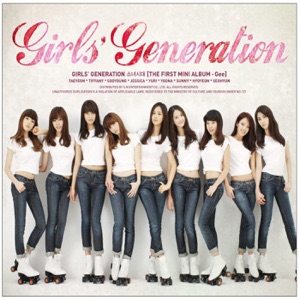
Gee
Girls' Generation — Gee
Nine straight weeks at No. 1 on KBS Music Bank — a record at the time — and routinely named one of Kpop’s most important songs.
- 2011

I Am the Best
2NE1 — I Am the Best
YG's brash electro-hop anthem (내가 제일 잘 나가) and 2NE1's signature title track.
- 2012
Alive
BIGBANG — Fantastic Baby
An EDM-driven arena anthem and one of the era's biggest global crossover hits.
Groups in 2nd Gen Kpop Heardle
Loading groups…
2nd Gen Kpop Heardle FAQ
Quick answers on how 2nd Gen Kpop Heardle works — the song pool, the rules and your stats.
Which groups are included?
Second-generation groups from roughly 2005–2012 — TVXQ, BIGBANG, Super Junior, SHINee, 2PM, INFINITE, Highlight, Girls' Generation, KARA, Wonder Girls, 2NE1, f(x), T-ARA, 4Minute, miss A and more. The full list, ordered by how many of their songs are in the pool, is further down this page.
What years count as second-generation Kpop?
Roughly 2005–2012. It follows the first generation (H.O.T., S.E.S., Shinhwa and others from the late 1990s and early 2000s) and marks the idol boom that carried Kpop across Asia. The boundaries are approximate rather than official.
What does second-generation Kpop sound like?
Bright synth-driven electropop with a strong four-on-the-floor pulse, layered and heavily processed backing vocals, and an arrangement built to deliver its hook within the first fifteen seconds. Songs from this era announce themselves rather than build, which makes them relatively easy to place by decade even when the title is hard to recall. You will feel it within a few 2nd Gen Kpop Heardle rounds.
Why do some second-generation songs exist in two languages?
Japanese-language releases became routine in this era. TVXQ, KARA and Girls’ Generation among others built substantial Japanese catalogues alongside their Korean ones, so a single song can have two official versions with different vocals over similar instrumentals — a real trap when you are guessing from the opening seconds.
Which groups define the second generation?
On the boy-group side, TVXQ, Super Junior, BIGBANG, SHINee, 2PM and INFINITE; on the girl-group side, Girls' Generation, Wonder Girls, KARA, 2NE1, f(x) and T-ARA. Most were built around instantly recognizable title tracks and point choreography.
Did any second-generation group chart in the US?
Yes. In 2009 the English version of Wonder Girls’ "Nobody" became the first Kpop act to enter the Billboard Hot 100, peaking at No. 76 — an early sign of the genre’s reach well before the third generation’s global breakthrough.
How is 2nd Gen Kpop Heardle different from the daily Kpop Heardle?
The daily puzzle is one shared set of ten songs for everyone each day; 2nd Gen Kpop Heardle reshuffles a fresh random round every time and only ever draws from second-generation groups.
Does 2nd Gen Kpop Heardle affect my daily streak?
No. 2nd Gen Kpop Heardle runs on a separate tally, so your daily streak and stats stay untouched.