

























Super Junior Heardle
Super Junior Heardle deals a short clip — guess the song from four choices, with unlimited rounds drawn from their discography.
SUPER JUNIOR Heardle
1 / 10
Every Super Junior Heardle round deals ten random clips from the pool — replay as often as you like, no daily limit.
About Super Junior
Super Junior debuted on November 6, 2005 under SM Entertainment and are one of the defining acts of K-pop's second generation. They started as a twelve-member group built around a rotational concept, but after Kyuhyun joined in 2006 the line-up settled at thirteen and the rotating idea was dropped — an unusually large boy group for the time. Two decades of catalogue later, Super Junior Heardle has more to draw on than almost any other page here.
A big part of their influence was the subgroup model: Super Junior split into smaller units for different sounds and markets — Super Junior-M aimed at the Mandopop audience in China, Super Junior-D&E (Donghae and Eunhyuk), and Super Junior-K.R.Y. among them — which helped carry them across Asia and earn the group its reputation as "kings of the Korean Wave".
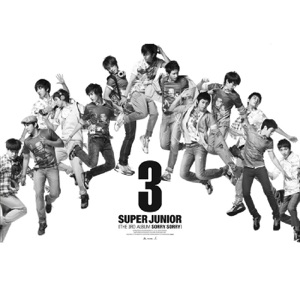
Their breakthrough came in 2009 with "Sorry, Sorry". The title track and its parent album became the best-selling Korean-language release of the year — topping charts in Taiwan, Thailand, China and the Philippines — and it is still the song most people name first. Later title tracks like "Bonamana", "Mamacita", "Black Suit", "SUPER Clap" and "House Party" kept them going through years of members' military service and line-up changes. All of them are staple Super Junior Heardle answers.
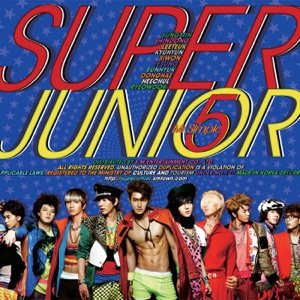
Twenty years of releases add up to one of the largest studio discographies in K-pop: "Twins" (2005), "Don't Don" (2007), "Sorry, Sorry" (2009), "Bonamana" (2010), "Mr. Simple" (2011), "Sexy, Free & Single" (2012), "Mamacita" (2014), "Devil" (2015), "Play" (2017), "Time Slip" (2019), "The Renaissance" (2021), "The Road" (2022) and "Super Junior25" (2025). That is thirteen studio albums before counting repackages, Japanese releases and sub-unit work — a genuinely deep Super Junior Heardle pool.
The sub-units are part of the story too, and they started early. Super Junior-K.R.Y. (Kyuhyun, Ryeowook and Yesung) formed in 2006 around ballads, Super Junior-T in 2007 leaned into trot, Super Junior-M launched in 2008 for the Mandarin-language market, and Super Junior-D&E paired Donghae and Eunhyuk from 2010. Because those releases are credited to the sub-unit rather than the full group, they sit outside a Super Junior Heardle round.
Their international footprint was unusual for the era. Super Junior became the first Korean act to perform a hundred concerts worldwide, reaching that mark in September 2014, the first K-pop artist to chart on Billboard's Latin Digital Song Sales chart in 2018, and the first K-pop act to hold a solo concert in Saudi Arabia in July 2019. Their award shelf runs to twenty Golden Disc Awards and thirteen Mnet Asian Music Awards. Longevity like that is why Super Junior Heardle rounds span eras.
This Super Junior Heardle draws on that long catalogue: press play, hear the opening of a track, and pick the right title from four Super Junior songs. Their fandom is E.L.F. — short for Ever Lasting Friends — whose Pearl Sapphire Blue is one of the oldest official fan colors in K-pop.
- Debut
- November 6, 2005
- Agency
- SM Entertainment
- Members
- 13 at its peak (debuted as 12; Kyuhyun joined 2006)
- Fandom
- E.L.F. (Ever Lasting Friends)
- Fan color
- Pearl Sapphire Blue
- Generation
- Second generation
More ways to play beyond Super Junior Heardle:
Where to start with Super Junior Heardle
A few landmark singles worth knowing before you play Super Junior Heardle — the game itself pulls from 137 Super Junior songs in all.
- 2009

Sorry, Sorry
Sorry, Sorry
The breakthrough and still their signature song. The 2009 album was the best-selling Korean-language release of the year and won Album of the Year at the Golden Disk Awards. The definitive Super Junior Heardle answer.
- 2010

The 4th Album -Bonamana (Repackaged)
Bonamana
The title track of their fourth album — another pan-Asian hit that kept the momentum from "Sorry, Sorry" going.
- 2012

Spy
Spy
A 2012 single built on blaring big-band horns and a dance-floor beat, from the run around their sixth album.
- 2014
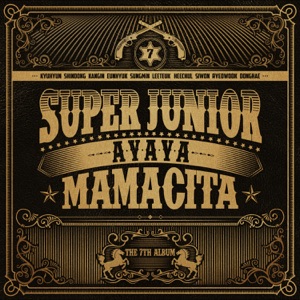
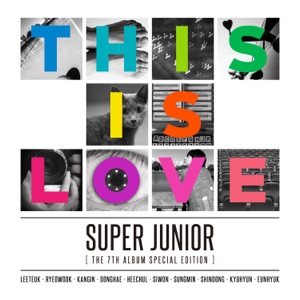
THE 7th Album 'MAMACITA'
Mamacita
The Latin-flavoured lead single from their seventh album, released as members were cycling through mandatory military service.
- 2017
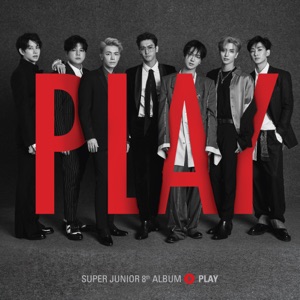
PLAY - The 8th Album
Black Suit
From the album "Play" — the comeback that marked most of the group returning from military service together.
- 2019
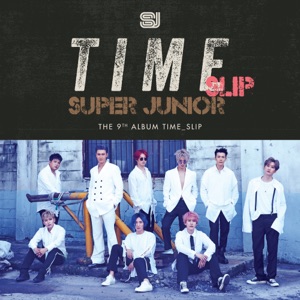
Time_Slip - The 9th Album
SUPER Clap
The retro, hand-clap-driven lead single from their ninth album, "Time_Slip".
- 2021
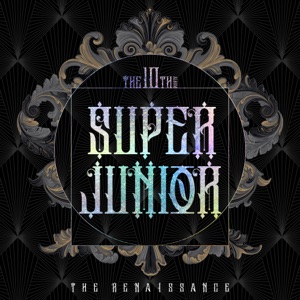
The Renaissance - The 10th Album
House Party
The title track of their tenth album, "The Renaissance", a bright dance-pop comeback fifteen years after their debut.
More K-pop Heardles
Super Junior Heardle FAQ
Quick answers on how Super Junior Heardle works — the song pool, the rules and your stats.
When did Super Junior debut and how many members are there?
Super Junior debuted on November 6, 2005 under SM Entertainment. They started as a twelve-member group with a rotational concept, then settled at thirteen members after Kyuhyun joined in 2006, when the rotating idea was dropped.
What are Super Junior's subgroups?
Super Junior pioneered the subgroup model in K-pop, splitting into smaller units such as Super Junior-M (aimed at the Chinese market), Super Junior-D&E (Donghae and Eunhyuk) and Super Junior-K.R.Y., alongside earlier units like Super Junior-T and Super Junior-H.
How many studio albums do Super Junior have?
Thirteen: "Twins" (2005), "Don't Don" (2007), "Sorry, Sorry" (2009), "Bonamana" (2010), "Mr. Simple" (2011), "Sexy, Free & Single" (2012), "Mamacita" (2014), "Devil" (2015), "Play" (2017), "Time Slip" (2019), "The Renaissance" (2021), "The Road" (2022) and "Super Junior25" (2025) — before counting repackages and Japanese releases. All thirteen feed the Super Junior Heardle pool.
What international firsts do Super Junior hold?
They were the first Korean act to perform a hundred concerts worldwide, hitting that mark in September 2014, the first K-pop artist to chart on Billboard's Latin Digital Song Sales chart in 2018, and the first K-pop act to hold a solo concert in Saudi Arabia in July 2019 — a reach that earned them the "kings of the Korean Wave" tag.
What does E.L.F. mean?
E.L.F. stands for Ever Lasting Friends, the name of Super Junior's fandom, founded in 2006. Its official fan color is Pearl Sapphire Blue, one of the oldest official fan colors in K-pop.
What is Super Junior's most famous song?
"Sorry, Sorry" (2009) is their signature track. Its album was the best-selling Korean-language release of 2009 and a huge hit across Asia, and the song is still the one most people associate with the group.
How many songs are in this Super Junior Heardle?
The Super Junior Heardle pool holds every Super Junior track that has a preview on Apple Music, spanning their studio albums, repackages and singles. Each round is ten songs at random. Releases credited to the sub-units — Super Junior-K.R.Y., -T, -M and -D&E — are separate catalogues and are not part of this pool, so everything you hear is a full-group Super Junior release.
Why can Super Junior Heardle be tricky?
Super Junior have a deep, long-running catalogue that swings from ballads to brass-heavy dance tracks, so the intros vary a lot. Listen for the main hook and replay the clip if you need to.
Does Super Junior Heardle affect my daily streak?
No — artist unlimited mode runs on a separate tally and never touches your daily streak or stats.